Do Weight Training Splits Matter?
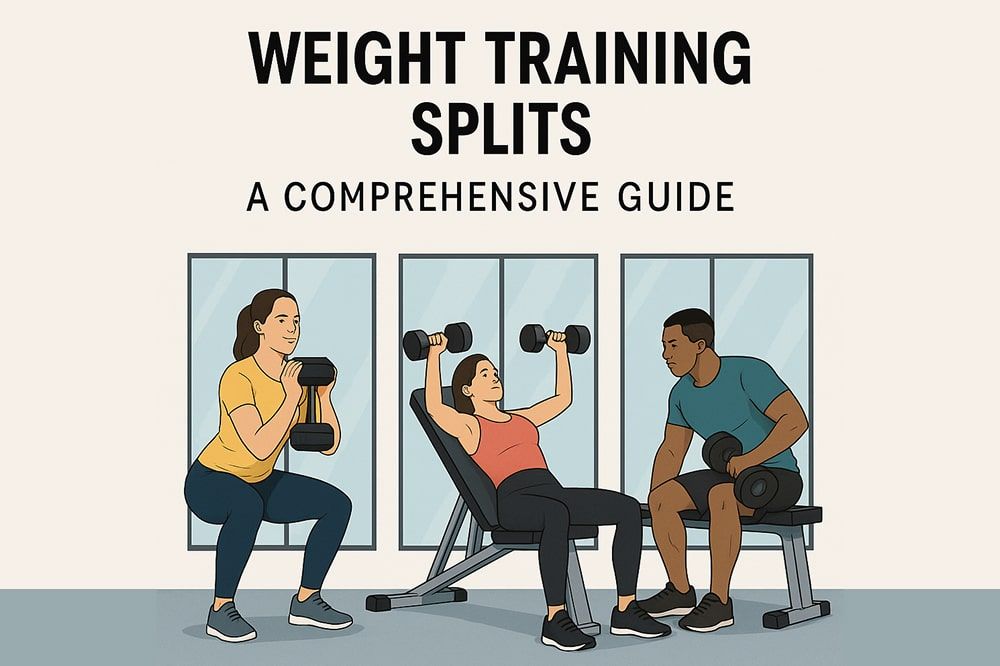
The Science Behind Weight Training Splits: What You Really Need to Know
When it comes to building strength, improving body composition, and sustaining long-term progress in the gym, few topics spark more debate than weight training splits. Should you train your whole body every session? Break things up into upper/lower body days? Or dive into a more advanced push-pull-legs split?
Let’s strip away the myths and break down what science really says about training splits—so you can make smarter choices with your workouts.
What Is a Weight Training Split?
A weight training split refers to how you organise your workout sessions across the week. Instead of hitting every muscle group in one session, a split divides training by body part or movement pattern to distribute volume, recovery, and intensity more effectively.
Common Types of Splits:
- Full Body – Train all major muscle groups in each session
- Upper/Lower – Alternate between upper body muscles and lower body muscle days
- Push-Pull-Legs (PPL) – Group exercises by movement pattern
- Bro Split – One major muscle group per session (e.g., chest day)
- Hybrid Splits – A custom mix based on lifestyle or rest days
The Frequency Factor: How Often Should You Train Each Muscle Group?
Research consistently shows that muscle protein synthesis (MPS) spikes after resistance training and returns to baseline within 36–48 hours. This means training a muscle once a week (as in most bro splits) likely isn’t enough for optimal growth.
Key Study:
- Schoenfeld et al. (2016): A meta-analysis found training each muscle group twice per week produced significantly greater measures of muscle hypertrophy than once per week.
Bottom line: More frequent training with moderate volume is superior for muscle growth compared to blasting a muscle once a week with high volume.
Total Volume Matters More Than Structure
While splits are useful for organisation, science indicates that weekly training volume is the most important variable for muscle growth—more so than how you arrange your training sessions.
Study Example:
- Baz-Valle et al. (2017) found that individuals who trained with equal weekly volume using either full-body routine or split routines saw similar measures of muscle hypertrophy.
This means:
- A full-body workout done 3x/week can be just as effective as a 5-day split—as long as total sets per muscle are matched.
Recovery, Age, and the 40+ Lifter
As we age, recovery demands increase due to declines in anabolic hormone levels and joint resilience. The benefit of using a training split for someone in their 40s or older is better fatigue management and improved recovery between sessions.
Age-Based Considerations:
- Sarcopenia (muscle loss) begins around age 30–40
- Recovery from intense sessions takes longer
- Training with slightly lower volume per session but higher resistance training frequency works better
✅ A 2020 review in Sports Medicine found that older adults benefit from progressive resistance training 2 – 3x/week, with muscle-specific recovery time factored in.
Training Splits and Hormonal Response
Certain splits may influence hormonal responses to training, but this varies by intensity, volume, and muscle mass involved—not split type alone.
- Compound Movements (e.g., squats, deadlifts) stimulate greater anabolic hormone responses
- Training larger muscle groups (legs, back) contributes more to testosterone and growth hormone spikes
In other words: Whether you're doing a full-body training plan or a push session, it’s the exercise selection and effort, not just the split, that drives hormonal response.
Advanced Programming: When Splits Really Matter
While beginners benefit from almost any consistent program, more advanced lifters may require splits to manage fatigue, accumulate targeted volume, and allow for better periodisation.
- Push-Pull-Legs (PPL) and Upper/Lower splits provide higher weekly volume while maintaining manageable session length
- These allow focus on movement quality and progressive overload
- They’re ideal for intermediate-to-advanced lifters aiming to prioritise lagging areas
🧠 Study Note: Ratamess et al. (2009) found that split routines allowed for greater intensity and effort per session due to reduced fatigue compared to full-body workouts.
The Psychology of Split Training
There’s also a behavioural benefit: training splits can make workouts more manageable, more focused, and more enjoyable. This often translates to better consistency—which matters more than any program on paper.
- You’re less likely to skip a 45-minute “push” day than a 90-minute entire body grind
- Focused sessions reduce cognitive fatigue and decision overwhelm
Consistency + adherence > theoretical perfection
Final Takeaways
- Muscle frequency matters: Aim to train each muscle group 2x/week
- Total volume is more important than the exact split structure
- Recovery capacity, especially after 40, should guide your choice
- Exercise selection and effort drive hormone response more than split
- Split training supports consistency and recovery for most adults
What Should You Do Next?
Choose the training split that suits your lifestyle, recovery, and goals. Then track your progress and adjust volume, intensity, or frequency as needed.
If you want expert guidance in building your own smart, age-appropriate weight training split, check out Kelly’s Coaching Online Coaching or get started with Personal Training in Milton Keynes.
You don’t need to train harder—you just need to train smarter.
Some FREE Guides/Programmes for you to Try
🗓 Weekly Schedule
- Monday – Full Body A (Strength & Form)
- Wednesday – Full Body B (Balance & Stability)
- Friday – Full Body C (Power & Conditioning)
✅ Format for Each Day
- 5 exercises per session
- 3 sets per exercise
- 8–15 reps per set depending on the move
- Rest: 60–90 seconds between sets
🔹Day 1: Full Body A – Strength & Form
- Goblet Squat – 3 sets of 10 reps
Hold a dumbbell at your chest, feet shoulder-width. Squat with your chest tall, hips below knees, heels grounded. - Incline Push-Up – 3 sets of 12 reps
Hands on a bench or box. Keep a straight line from head to heels. Lower slowly, push back up. - Bent-Over Dumbbell Row – 3 sets of 10 reps per arm
One hand on a bench, back flat, row DB to hip. Control on the way down. - Glute Bridge – 3 sets of 15 reps
Lie down, knees bent, feet flat. Drive hips up, squeeze glutes, then lower slowly. - Dead Bug (Core) – 3 sets of 10 reps per side
Lie on your back, arms and legs in the air. Lower opposite limbs while keeping your lower back flat.
🔹Day 2: Full Body B – Balance & Stability
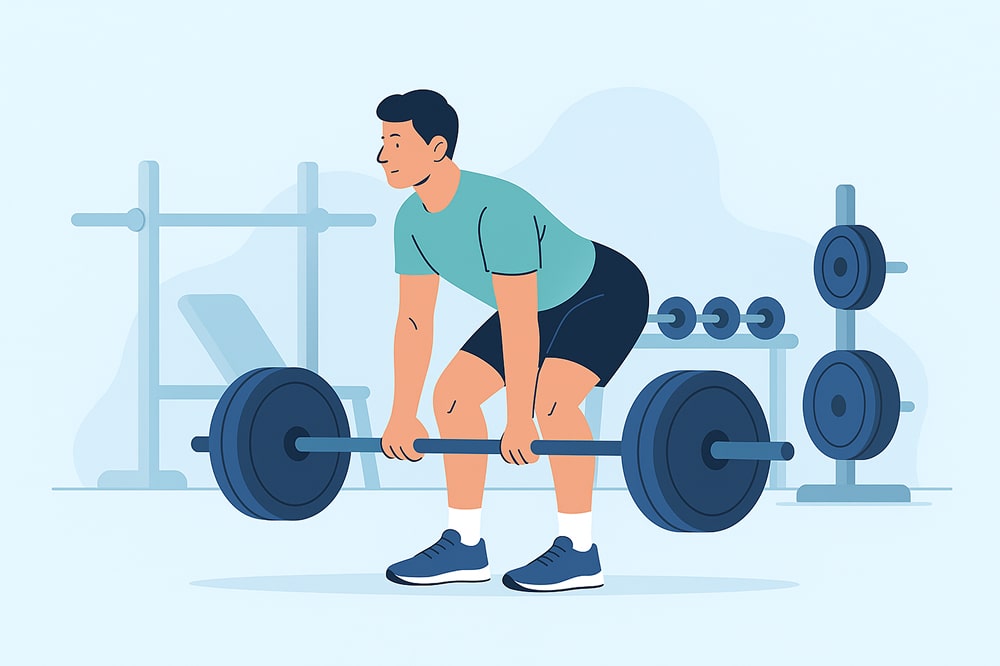
- Dumbbell Romanian Deadlift – 3 sets of 10 reps
Hinge at the hips, soft knees, keep DBs close to legs. Stretch the hamstrings, stand tall. - Seated Dumbbell Shoulder Press – 3 sets of 10–12 reps
Sit upright, DBs at shoulder height. Press overhead without arching your back. - Step-Ups – 3 sets of 10 reps per leg
Step onto a stable box or bench. Drive through the lead leg, then step down with control. - Band Pull-Aparts – 3 sets of 15 reps
Hold a resistance band at shoulder height. Pull apart and squeeze your shoulder blades together. - Side Plank – 3 sets of 30 seconds per side
Elbow beneath shoulder, feet stacked, hips high. Hold a straight line.
🔹Day 3: Full Body C – Power & Conditioning
- Kettlebell Swings – 3 sets of 20 reps
Hinge, swing kettlebell up to chest height using explosive hip power. Do not squat the movement. - Push-Ups – 3 sets of 10–12 reps
Straight body line, chest to floor, elbows at 45°. Modify on knees if needed. - Reverse Lunges (Bodyweight or Goblet) – 3 sets of 10 reps per leg
Step back, keep chest upright, drive through front heel. - Chest Fly (Dumbbells) – 3 sets of 12 reps
Lie on a bench, arms outstretched. Lower DBs in an arc, stretch, then bring back together. - Hollow Body Hold – 3 sets of 20 seconds
Lie flat, raise arms and legs. Keep lower back pressed to the floor.
🧠 Tips for Best Results
- Progress by increasing weight or reps weekly
- Use a workout log to track performance
- Don’t skip your warm-up or cool-down (5–10 mins each)
- Focus on form over speed or weight
- Rest and hydrate on non-training days
Here’s a full Upper/Lower Body Split Workout Plan — ideal for busy adults aged 35–55 looking to build strength, improve mobility, and feel great without spending hours in the gym.
🗓 Weekly Schedule
- Monday – Upper Body A (Strength & Stability)
- Tuesday – Lower Body A (Glutes, Hamstrings, Quads)
- Wednesday – Rest or Active Recovery
- Thursday – Upper Body B (Push/Pull Focus)
- Friday – Lower Body B (Strength & Power)
- Weekend – Optional mobility/yoga or rest
🔹Day 1: Upper Body A – Strength & Stability
- Incline Dumbbell Press – 3 sets of 10
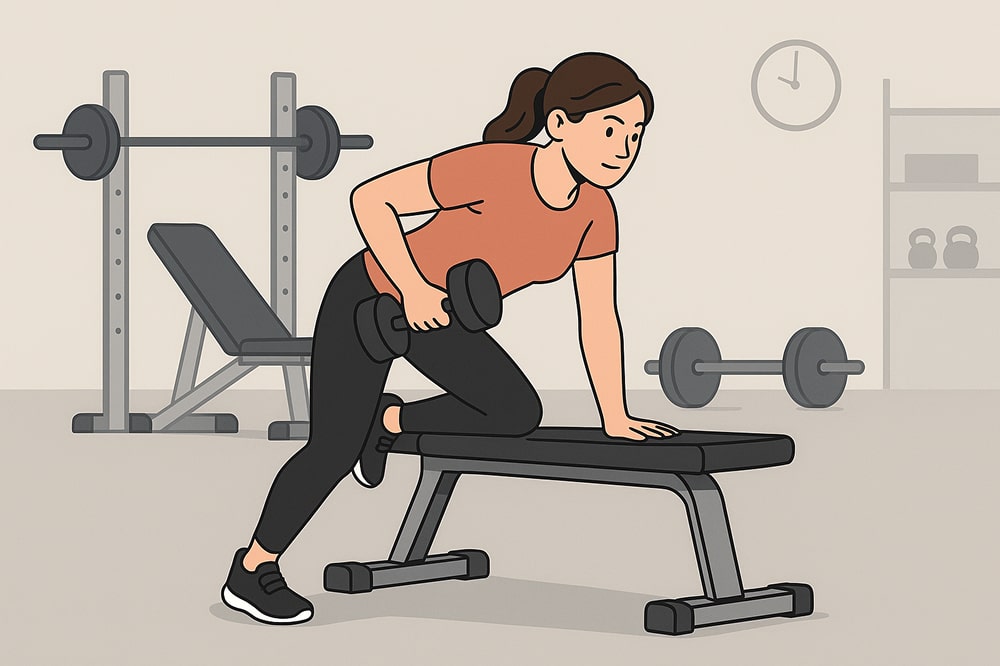
Sit on an incline bench. Press dumbbells upward, control back down. - One-Arm Dumbbell Row – 3 sets of 10 per side
Support with one knee/hand on a bench. Row dumbbell to your side with a flat back. - Seated Arnold Press – 3 sets of 10
Start with palms facing you at shoulder height, rotate outward and press overhead. - Lat Pulldown or Assisted Pull-Up – 3 sets of 8–10
Pull the bar to your upper chest, squeeze shoulder blades. - Plank with Shoulder Taps – 3 sets of 30 seconds
In a high plank, alternate tapping opposite shoulders without twisting.
🔹Day 2: Lower Body A – Glute & Hamstring Focus
- Goblet Squat – 3 sets of 12
Hold a dumbbell at chest, squat low, drive through heels. - Romanian Deadlifts (DB or Barbell) – 3 sets of 10
Hinge at hips, stretch hamstrings, keep back flat. - Glute Bridges or Hip Thrusts – 3 sets of 15
Squeeze glutes hard at the top, pause, and lower. - Walking Lunges – 3 sets of 12 per leg
Take long steps, keep front heel grounded. - Standing Calf Raises – 3 sets of 20
Slow up and down, full range.
🔹Day 4: Upper Body B – Push/Pull Balance
- Push-Ups (Regular or Incline) – 3 sets of 10–15
Keep elbows at 45 degrees. Core tight. - Bent-Over Barbell Row or Dumbbell Row – 3 sets of 10
Use a neutral spine, pull toward belly button. - Dumbbell Lateral Raises – 3 sets of 15
Raise DBs to shoulder height, slow on the way down. - Tricep Dips (Bench or Assisted Machine) – 3 sets of 10
Lower yourself until arms are at 90°, push back up. - Hammer Curls – 3 sets of 15
Slow up, even slower on the way down. Don’t swing.
🔹Day 5: Lower Body B – Strength & Power
- Barbell Back Squat (or DB Front Squat) – 3 sets of 8
Keep torso upright, knees tracking toes. - Step-Ups (Weighted if possible) – 3 sets of 10 per leg
Step onto box or bench, drive through heel. - Kettlebell Swings – 3 sets of 20
Use hips to swing KB up to chest height, don’t squat. - Bulgarian Split Squat – 3 sets of 10 per leg
Back foot elevated, control the descent. - Side Plank with Leg Lift – 3 sets of 30 seconds/side
Challenge your obliques and glutes simultaneously.
✅ Optional Weekend Activity
- Yoga or mobility session
- 30–45 minutes walk or light cycling
- Gentle bodyweight circuit (planks, squats, light stretching)
Here’s your Push-Pull-Lower (PPL) Workout Plan, ideal for intermediate lifters, beginners and returners in their 30s–50s. This structure works great if you want to train 3–5 sessions per week, hitting each muscle group with enough intensity and recovery time.
🗓 Weekly Training Schedule (3-Day Format)
- Monday – Push Day (Chest, Shoulders, Triceps)
- Wednesday – Pull Day (Back, Biceps)
- Friday – Lower Day (Legs, Glutes, Core)
💡 Want to train more? Repeat the cycle with new variations or add a weekend mobility/cardio session.
🔹Day 1: Push Day
Focus: Pressing and pushing movements for chest, shoulders, and triceps.
- Incline Dumbbell Press – 3 sets of 10 reps
Setup on an incline bench. Lower DBs slowly to chest, then press back up. - Seated Dumbbell Shoulder Press – 3 sets of 10
Keep back flat and press overhead. Don’t flare elbows too wide. - Push-Ups (Standard or Incline) – 3 sets of 10–15
Straight body line, elbows at 45°. Modify on knees or incline if needed. - Dumbbell Lateral Raises – 3 sets of 12
Raise arms to shoulder height with soft elbows. Control the descent. - Overhead Triceps Extension (Dumbbell or Cable) – 3 sets of 12
Lift DB overhead, elbows tight, and lower behind head. Extend fully.
🔹Day 2: Pull Day
Focus: Pulling movements for the back and biceps.
- Dumbbell Bent-Over Row – 3 sets of 10 reps
Hinge at hips, back flat. Pull DBs to hips, squeeze shoulder blades. - Assisted Pull-Ups or Lat Pulldown – 3 sets of 8–10
Pull the bar to your upper chest. Use assistance if needed. - Single-Arm Dumbbell Row (Bench Support) – 3 sets of 10 per arm
Keep torso still, pull elbow toward waist. - Face Pulls (Cable or Resistance Band) – 3 sets of 15
Pull toward forehead, thumbs back. Squeeze upper back. - EZ Bar or Dumbbell Bicep Curls – 3 sets of 10–12
Slow up, even slower on the way down. Don’t swing.
🔹Day 3: Lower Day
Focus: Quads, hamstrings, glutes, calves, and core.
- Barbell or Dumbbell Goblet Squats – 3 sets of 12
Chest tall, drive through heels. Control the depth. - Romanian Deadlifts (DB or Barbell) – 3 sets of 10
Hinge at hips, stretch hamstrings. Keep back flat. - Walking Lunges – 3 sets of 10 per leg
Step long, push through front heel. Keep knee above ankle. - Hip Thrusts (Barbell or Bodyweight) – 3 sets of 15
Pause at the top, squeeze glutes. Lower under control. - Weighted Plank or Plank Hold – 3 sets of 30–45 seconds
Straight body, belly button pulled in. Don’t sag hips.
🧠 Coaching Tips
- Warm up 5–10 mins with dynamic movement before each session (e.g. brisk walking, light mobility)
- Progress by increasing reps or weight each training week (as long as form stays sharp)
- Log your workouts and note improvements
- Recovery is key — don’t train sore muscles back-to-back
Here’s your Bro Split AKA Single Muscle Workout Plan, ideal for intermediate lifters, and advance lifters. This structure works great if you want to train 5+ sessions per week, hitting each muscle group with enough intensity and recovery time.
🗓 Weekly Schedule
- Monday – Chest Day
- Tuesday – Back Day
- Wednesday – Leg Day
- Thursday – Shoulders Day
- Friday – Arms Day (Biceps & Triceps)
- Saturday/Sunday – Rest or optional light cardio/stretching
🔴Day 1 – Chest
- Barbell Bench Press – 4 sets of 8
Keep feet planted and elbows at a 45° angle. Lower to mid-chest. - Incline Dumbbell Press – 3 sets of 10
Focus on upper chest. Full range of motion. - Cable Chest Flys – 3 sets of 12
Slow, controlled reps. Keep a slight bend in the elbows. - Push-Ups (to failure) – 2 sets
As many good-form reps as possible. Chest to floor.
🔵Day 2 – Back
- Pull-Ups (Assisted if needed) – 4 sets of 8
Keep chest up and pull with your back, not arms. - Barbell Bent-Over Rows – 3 sets of 10
Hinge at hips, pull bar to just below ribs. - Single-Arm Dumbbell Rows – 3 sets of 10 per side
Keep core tight and elbow close. - Cable Lat Pulldown or Straight Arm Pulldown – 3 sets of 12
Squeeze lats, don’t shrug shoulders.
🟢Day 3 – Legs
- Barbell Back Squat – 4 sets of 8
Keep torso upright, knees tracking toes. - Romanian Deadlifts (DB or Barbell) – 3 sets of 10
Hamstring stretch, hinge at the hips. - Walking Lunges (Bodyweight or DB) – 3 sets of 12 per leg
Focus on balance and glute activation. - Leg Extensions – 3 sets of 12
Slow controlled reps, squeeze at the top. - Standing Calf Raises – 3 sets of 20
Full stretch and full contraction.
🟡Day 4 – Shoulders
- Seated Dumbbell Overhead Press – 4 sets of 10
Keep your core tight and press straight overhead. - Dumbbell Lateral Raises – 3 sets of 15
Raise to shoulder height with control. - Cable Rear Delt Flys or Reverse Pec Deck – 3 sets of 12
Squeeze shoulder blades together at peak. - Front Plate Raises – 3 sets of 12
Lift to shoulder height. Don’t swing. - Barbell Shrugs – 3 sets of 15
Lift shoulders straight up. Pause at the top.
🟣Day 5 – Arms (Biceps & Triceps)
Biceps:
- Barbell Bicep Curls – 3 sets of 10
Full range, slow on the way down. - Incline Dumbbell Curls – 3 sets of 12
Keep elbows back, stretch at the bottom. - EZ Bar Preacher Curls – 3 sets of 12
Avoid swinging. Isolate the biceps.
Triceps:
- Close-Grip Bench Press – 3 sets of 8
Keep elbows tucked in. Press with triceps. - Overhead Dumbbell Tricep Extension – 3 sets of 10
Keep upper arms vertical. - Tricep Rope Pushdown – 3 sets of 15
Spread rope at the bottom, pause briefly.
🧠 Notes for Success
- Warm up properly before each session (5–10 mins of mobility + activation)
- Train with intensity, but prioritise form over ego
- Log your sets, reps, and weights weekly
- Prioritise sleep, protein, and hydration for best recovery
- Rest 60–90 seconds between sets
Remember if you ever need some personal training plans specifically for you. You always have the option of Online Personal Training or face to face Personal Training if you live around Milton Keynes, Cranfield, or surrounding areas.
Fancy some further reading. Here are some external links:
- https://pubmed.ncbi.nlm.nih.gov/27102172/ – Study showing optimal weekly training frequency for hypertrophy
- https://bmcsportsscimedrehabil.biomedcentral.com/articles/10.1186/s13102-022-00481-7 – Randomised trial comparing upper/lower split vs full-body in women
- https://mennohenselmans.com/high-frequency-resistance-training-is-not-more-effective-than-low-frequency-resistance-training-in-increasing-muscle-mass-and-strength-in-well-trained-men/ – Review of bro-split effectiveness and soreness
- https://www.frontiersin.org/articles/10.3389/fphys.2018.00744/full – Meta-analysis on frequency effects for hypertrophy
- https://pmc.ncbi.nlm.nih.gov/articles/PMC8372753/ – Study showing similar gains from split vs full-body
- https://sportsmedicine-open.springeropen.com/articles/10.1186/s40798-018-0149-9 – Meta-analysis on frequency for strength
- https://onlinelibrary.wiley.com/doi/10.1002/ejsc.12104 – Fullbody training for greater fat-loss
- https://www.artofmanliness.com/health-fitness/fitness/bro-splits/ – Expert take on bro splits vs frequency
- https://www.health.harvard.edu/staying-healthy/resistance-training-by-the-numbers – Harvard overview of ideal resistance frequency
- https://pubmed.ncbi.nlm.nih.gov/38874955/ – FB RT vs split routines on fat mass and composition
- https://pmc.ncbi.nlm.nih.gov/articles/PMC9107721/ – Split-body supports high training volume
- https://www.nature.com/articles/s41598-024-59788-9 – Eccentric training improves lower-limb power
- https://www.mayoclinic.org/healthy-lifestyle/fitness/in-depth/strength-training/art-20046670 – Mayo Clinic strength training guidance
- https://www.rocksolidfitnessfl.com/twice-a-week-strength-training/ – Twice-a-week optimal strength frequency
- https://www.tigerfitness.com/blogs/workouts/why-full-body-training-is-superior-benefits-science-and-sample-routine – Fullbody training benefits
- https://www.unm.edu/~lkravitz/Article%20folder/frequency.html – Review on frequency for trained adults
- https://www.performancelab.com/blogs/fitness/full-body-workout-benefits – Benefits of full-body workouts
- https://www.boxrox.com/who-should-consider-a-bro-split-when-training/ – Bro split overview and audience
- https://smartgolffitness.com/debunking-the-split-vs-full-body-workout-debate-what-the-science-says/ – Volume vs split structuring debate
- https://www.healthline.com/health/fitness/benefits-of-strength-training – Comprehensive strength training benefits
Latest Posts




Services
More
Base
Cranfield Road,
North Crawley,
MK16 9HP
